Showing posts with label 2001. Show all posts

Saturday, July 16, 2011

Acura NSX-T, 2001


 Acura NSX-T, 2001

Evolved from a rich racing heritage, the Acura NSX combines world-class performance and styling with exceptional driveability and refinement. The 2001 NSX is the benchmark for Acura technology having established itself as a leader in the exotic supercar segment over the past 10 years.

The 2001 NSX offers two mid-ship mounted distinct powertrains. First is a lightweight, all-aluminum 3.2-liter, DOHC, 24-valve, 90-degree V-6 engine yielding 290 horsepower and 224 lbs-ft of torque, coupled to a 6-speed close-ratio manual transmission. When equipped with the optional 4-speed automatic transmission with Formula One-inspired sequential SportShift, the NSX powerplant is a 3.0-liter V-6 engine that generates 252 horsepower and 210 lbs-ft of torque.

Both NSX engines are equipped with Acura's patented Variable Valve Timing and Lift Electronic Control (VTEC) system, an ingenious Variable Volume Induction System, direct ignition and the computerized PGM-FI fuel injection system pioneered in Formula One racing.

Every detail on the NSX has been engineered to produce the utmost in performance. The highly rigid NSX chassis features all-aluminum construction for low overall weight and high rigidity. The four-wheel independent double-wishbone suspension also features aluminum-alloy control arms and hub carriers to minimize unsprung weight for optimum handling. Aluminum subframes for the front and rear suspension further reduce suspension weight. The braking system features large-diameter, ventilated four-wheel discs and an advanced four-channel Anti-Lock Braking System (ABS). The sophisticated Traction Control System (TCS) has been designed to help limit wheel-spin and enhance control.

The interior of the NSX evokes the image of the cockpit of a jet fighter, providing ample visibility, easy-to-read instrument gauges and snug, leather seats. As with all Acura models, the NSX comes with a long list of standard equipment and comfort and convenience features including an automatic climate control system, an Acura/Bose� Music System, power windows and door locks, cruise control and an electronic immobilizer system.

The 2001 NSX, like all Acura vehicles, is covered by a comprehensive 4-year/50,000-mile bumper-to-bumper limited warranty. Additional ownership benefits include Acura Total Luxury Care (TLC), which provides free 24-hour roadside assistance, concierge service and trip routing.

Acura Integra, 2001

 
 Acura Integra, 2001

CONCEPTS AND GOALS
The Integra Sports Coupe and Sports Sedan were designed to achieve:
+ Spirited engine performance, with excellent acceleration, sporty, free-revving response and top-level smoothness and flexibility
+ Crisp, precise handling with excellent driver feedback and steering response
+ Distinctive, aerodynamic styling with high efficiency and low wind noise
+ A rigid structure for accurate handling response, long-term durability, excellent corrosion protection and optimum occupant safety
+ An intimate, highly ergonomic driving environment

OVERVIEW
The third-generation Acura Integra (introduced in 1994) features a number of technological innovations that enhance performance and handling and provide high levels of safety, durability, efficiency, comfort and ride quality. The Integra is available as a Sports Coupe or Sports Sedan. For 2001 the Sports Coupe and Sports Sedan come in three trim levels &emdash; LS, GS and GS-R. The ultra-high performance Integra Type R Sports Coupe also returns for 2001, and is discussed in detail in its own section.

The Integra has evolved and matured in its three generations. The Integra offers a comprehensive list of standard luxury, comfort and safety features. It features a standard driver's and front passenger's air bag Supplemental Restraint System (SRS) in all models. Additionally, features such as an AM/FM/CD six-speaker audio system, a power moon roof, windows, door mirrors and locks, Anti-Lock Braking System (ABS) and a lumbar/height/tilt adjustment for the driver's seat are all standard equipment.

Key performance features of the Integra include:

+ 140-hp, 1.8-liter, 16-valve, DOHC, 4-cylinder engine (LS and GS)
+ 170-hp, 1.8-liter, 16-valve, DOHC, VTEC 4-cylinder engine (GS-R)
+ 5-speed manual or an optional electronically controlled, 4-speed automatic transmission with the sophisticated Grade Logic Control System (LS and GS)
+ Close-ratio 5-speed manual transmission (GS-R)
+ Four-wheel independent double-wishbone suspension
+ Four-wheel disc brakes
+ Variable power-assisted steering with rotary-valve steering gear

Key safety features of the Integra include:

+ Standard driver's and front passenger's air bag Supplemental Restraint System (SRS) on all models
+ Standard Anti-Lock Braking System (ABS)
+ 3-point outboard seat belts
+ Projector beam headlights
+ Side-impact door-protection beams
+ Side-intrusion shoulder pads

Saturday, May 14, 2011

SAAB-9x Concept Car, 2001

SAAB-9x Concept Car, 2001


SAAB-9x Concept Car, 2001

Tuesday, March 29, 2011

Lexus SC430 Pace Car, 2001

Lexus SC430 Pace Car, 2001


The Lexus SC series is a personal luxury coupé manufactured by the Toyota Motor Corporation under the Lexus brand and sold in Japan as the Toyota Soarer. The first generation, available as the SC 300 or SC 400 was in production from 1991 until July 7, 2000. A second-generation model, the SC 430, went into production in 2001.

Lexus showcased its new sports convertible, the SC 430, at the Paris Motorshow in 2000, and the car entered production the following year. Power was provided by a 4.3 L 3UZ-FE V8 engine mated to a five-speed automatic transmission. This produces 0-60 runs around 6 seconds using the same engine found in the Lexus LS.

Lexus designers from Europe and Japan worked together to create the convertible's sleek, streamlined design. The car features a retractable aluminium hardtop, all-leather interior, and 18 in alloy wheels.

Lexus LS430, 2001

Lexus LS430, 2001


The Lexus LS (sold as the Toyota Celsior in Japan, Australia, and some other countries.) is a V8-powered, rear wheel drive luxury car that serves as the flagship of Toyota's luxury Lexus division.

First generation (UF10)

UF10 I (1989)
The UF10 I LS 400 was produced from 1989 to 1994. The model introduced the Lexus nameplate to the US, and soon after won critical acclaim, becoming Wheels magazine's Car of the Year and earning a place on Car and Driver magazine's Ten Best list for 1990. The LS 400 was initially intended to be introduced as a standalone model for Lexus, but ultimately was sold alongside the ES 250, an entry-level luxury car that was based on the Toyota Camry.

UF10 II (1993)
For the 1993 model year, the LS 400 (now designated as the UF10 II) was introduced with larger brake rotors, standard passenger's side front airbags, larger wheels and tires, and numerous other upgrades.

Second generation (UF20)

UF20 III (1995)
Introduced in 1995, the UF20 III LS 400 was an evolutionary redesign of the LS and featured a new body that eliminated 300 lb from the previous car. The wheelbase was increased by 1.4 in, resulting in more interior and trunk space, yet the overall length of the car remained at 196.7 in. The durability of the brake system was improved as well.

The most noticeable cosmetic upgrades included a new front fascia with an increased gap between the headlights and grille, new headlights and taillights. The interior received a minor redesign with a more modern dashboard layout and the center console receiving a slight facelift.

UF20 IV (1998)
For the 1998 model year, the UF20 IV LS 400 was introduced. New interior amenities included retractable rear headrests, wood accents on the leather-bound steering wheel and gear selector, and a navigation system with a concealed antenna. A new "jam protection system" for the vehicle's windows was designed to reduce the risk of possible injury by preventing the windows from closing if an object came in between the window and the door frame. Door window controls were also added to the vehicle remote control.

Exterior updates included new five spoke wheels as well as redesigned rear view mirrors that reduced the amount of wind noise. The automatic headlights were now equipped with a delay feature that allowed the headlights to remain on while the occupants exited the vehicle.

The revised LS 400 featured Toyota's new 290 hp VVT-i UZ engine mated to a five-speed automatic transmission. The drivetrain improvements not only enabled the 3,890 lb sedan to accelerate from 0-60 mph in 6.5 seconds but also improved the vehicle's fuel economy.

Third generation (UF30)

UF30 I (2001)
For 2001, the UF30 I LS 430 was introduced. While previous LS redesigns were evolutionary, the 2001 update was a more thorough update of the model's exterior and interior. The UF30 had a completely redesigned suspension and a brand new 4.3 L engine generating 290 hp (216 kW) and 320 ft•lbf (434 N•m) of torque. Lexus claims the LS430 can run 0-60mph in 5.9 seconds. A three-inch wheelbase stretch resulted in more interior volume than the competing Mercedes-Benz S-Class and allowed the engine to be positioned farther rearward for better balance. Features such as Dynamic Laser Cruise Control, a DVD-based navigation system and heated & cooled seats became available. These and other features, such as sonar assisted parking, power rear seats with massage and a rear cooler were bundled in the 'Ultra Luxury Package.'

In the interior the most notable design changes included additional woodgrain trim on the dashboard and doors as well as the addition of an LCD screen on the center console. The exterior of the vehicle was completely new with the vehicle's dimensions increasing in terms of length and height.

UF30 II (2004)
The UF30 II was introduced in 2004. Lexus freshened the front & rear fascias and added as standard equipment previously optional features, such as a one-touch power moonroof, power rear sunshade, and lighted rear-seat vanity mirrors. Some features previously included in the Custom and Ultra Luxury packages became available separately. The transmission got an added sixth gear, and keyless 'smart access' and Bluetooth technology became optional, while a pre-collision system, similar to Mercedes-Benz's Pre-Safe, which used millimeter-wavelength radar to predict crashes and allow distance-aware cruise control, was added as an option. Other updates included different wheels, projector headlamps, and LED taillights.

The 2001 to 2006 LS 430 was the most reliable luxury sedan in the J.D. Power and Associates Initial Quality survey, and the early models of this series were the most reliable cars in the survey. In later studies of defects after 3 years of ownership, the LS 430 is also at the top of the pack. The third season of the popular BBC television program, Spooks, featured a number of Lexus LS vehicles as part of the brand's introduction in the British market.

Monday, August 23, 2010

2011 Chevrolet Camaro


Chevrolet camaro

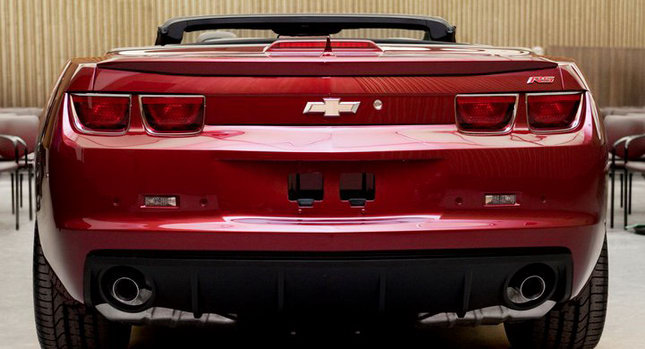
2011 Chevrolet Camaro. Rear

The new 2011 Chevrolet camaro

Chevrolet Camaro history
Call 1st Generation has features like: - year 1967 - total production of 220,906 cars - year 1968 - total production of 235,147 cars - year 1969 - total production of 243,085 cars These vehicles allow in their VIN (Vehicle Identification Numbers), a way to identify the 6 cylinder engines (online) of the V8, in his third character, the number "3" indicates that it is 6 cylinder, while the number "4" indicates it is a V8.
The 1970s were not profitable for the Chevrolet Camaro: rising oil prices made the consumers choose vehicles that consume less. Antipollution measures did away with the big V8 in 1972 and the end of production of the SS in 1973 and the appearance of the Chevrolet Camaro LT focusing more luxury and comfort and less power, giving rise to even six-cylinder engines, less powerful and more economical. The crisis is another "victim" in 74, ending with the Z28. On May 11, 1978, the Chevrolet Camaro left the No. 2 plant in Van Nuys, California. And in 1982, enters the field, a new version of the Chevrolet camaro IROC-Z call (international racing champions of) this version was until 1990 when production ended, the third generation Camaro, with the major aesthetic changes after 12 years. With its futuristic design is chosen by almost a third time as the official Pace Car Indy 500 500.

First-generation Chevrolet Camaro (1967-69)
Mechanically great news also were on account of the new all-aluminum engine, again derived from the same unit Chevrolet Corvette.Is a 5.7-liter V8 that produced 305 horsepower in the Z28 and the SS 320. New disc brakes with Bosch ABS for assistance in the four weels.No significant change occurred until 1998.

 The new Chevrolet Camaro generation

Launched in 2009, the new generation Chevrolet Camaro is a reinterpretation of the models launched between 1967 and 1969 (first generation), with a futuristic  and aggressive design. It is today compared with its competitors, the Ford Mustang and Dodge Challenger, the faster and better grades on tests conducted between the three models.
Version V6
Engine: 3.6L V6 12V V6 engine now is technologically well developed, producing around 300 hp, power that was observed in the old V8 previously used by GM in both the Camaro as in other sports brand V8
Engine: 6.2L V8 16V Power: 426 HP
2009-2010 Chevrolet Camaro
The new V10 engine camaro reach speeds exceeding 300 miles per hour, besides being very comfortable, was a big star of the film Transformers, playing the bublebee.